
WorkSafe
The dangerous goods manifest and placards being current is a critical line on the readiness list, with risk assessments for the plant.
For service stations
A fuel site keeps two kinds of records: the daily ones the console staff do, and the yearly ones a contractor brings. WorkshopSafe keeps both, against the pump or tank they concern, with who did each one and when.
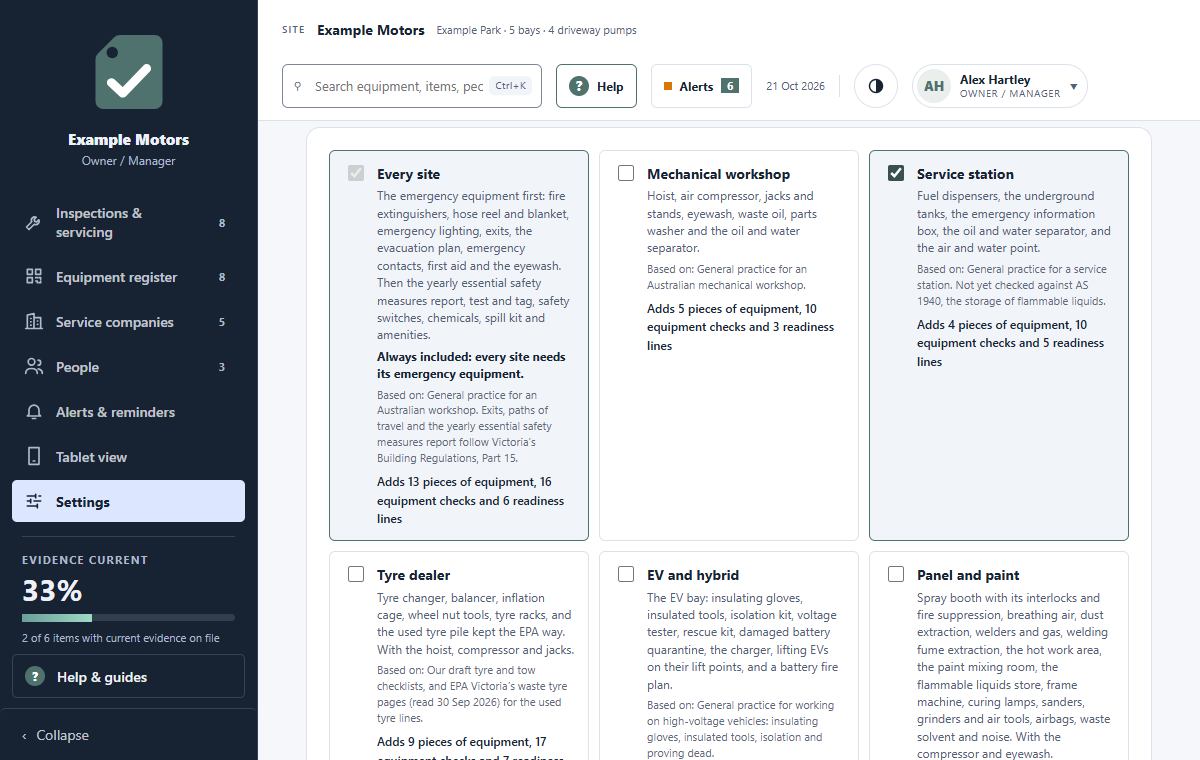
Tick Service station when you start and WorkshopSafe loads its starter list: each piece of equipment with its checks, how often, and who does them. It adds:
The list holds 5 pieces of equipment and 8 checks, on top of the emergency equipment every site gets. If the site has a workshop too, tick Mechanical workshop as well. The service station list has not yet been checked against AS 1940, the standard for storing flammable liquids, so treat it as a starting point.
Each pump and tank gets its own QR label. Console staff scan it, enter their PIN and tick the daily check on the shop tablet; a fail can carry a photo. The yearly leak test and dispenser service are recorded against the same tank or pump, with the contractor’s report attached.
The dangerous goods manifest and placards being current is a critical line on the readiness list, with risk assessments for the plant.
Underground tank leak test reports and the daily reconciliation records are on the readiness list, so a missing report shows before anyone asks.
Fuel dispensers verified for trade is its own line, marked for the National Measurement Institute.
Running several sites? Each keeps its own register and tablets, and head office sees every site’s readiness on one screen. WorkshopSafe keeps the records; it does not replace advice from a qualified safety professional.
Tick Service station, label the pumps and tanks, and the console staff tick off the daily checks. 30 days, the full app, no card needed.